Description
Make Early Math Easier to See, Touch and Practise
For many children, numbers become easier to understand when they can see and handle something, rather than only looking at sums on a page.
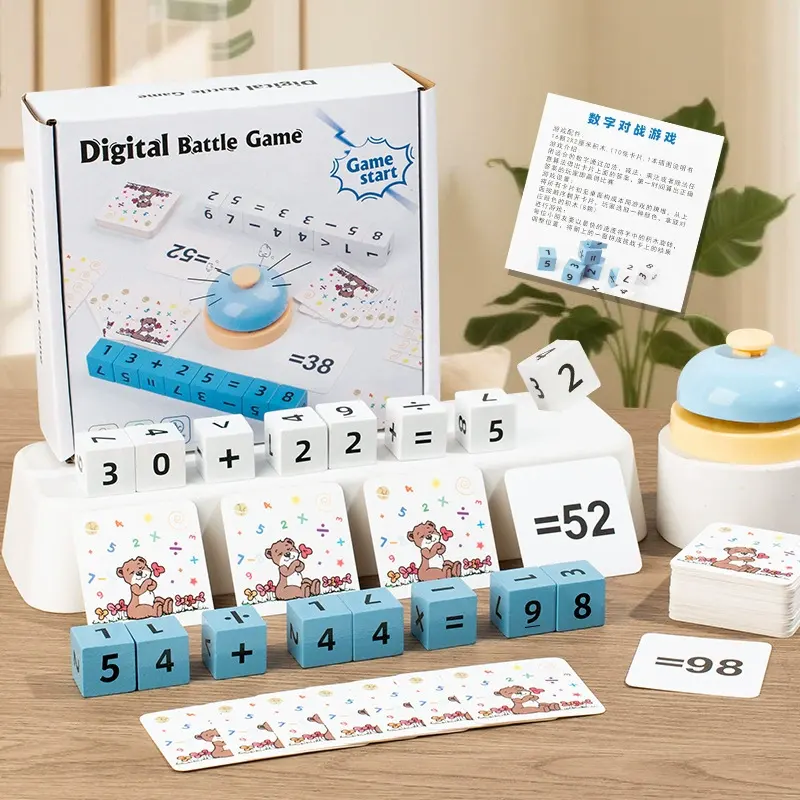
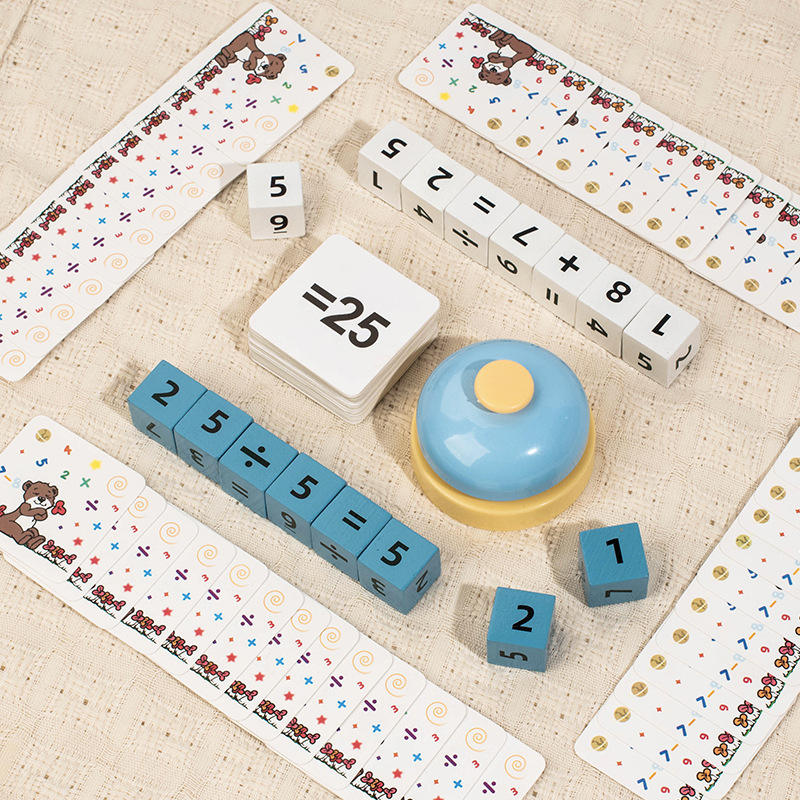
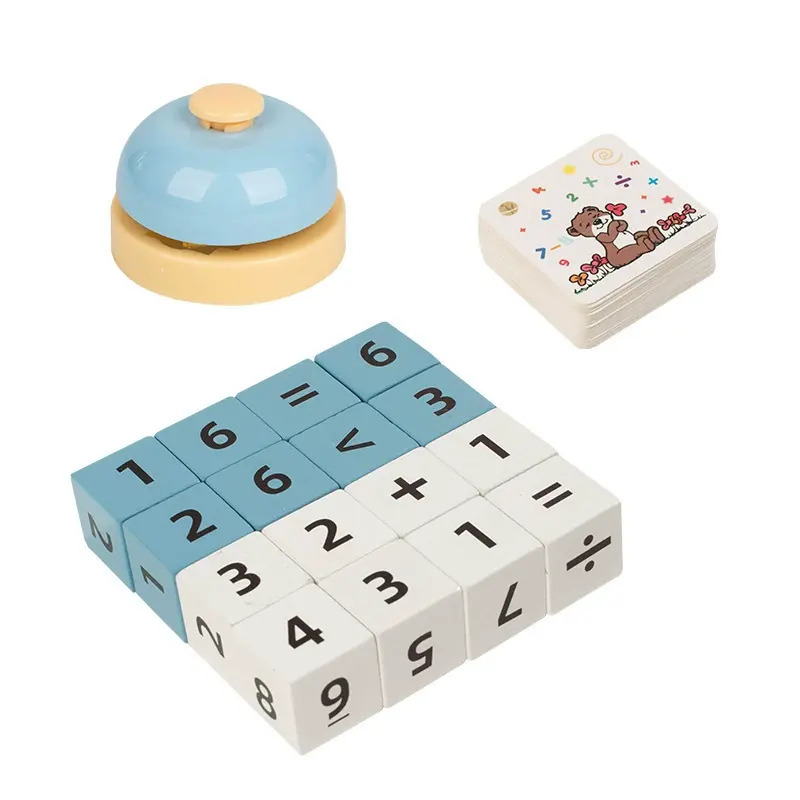
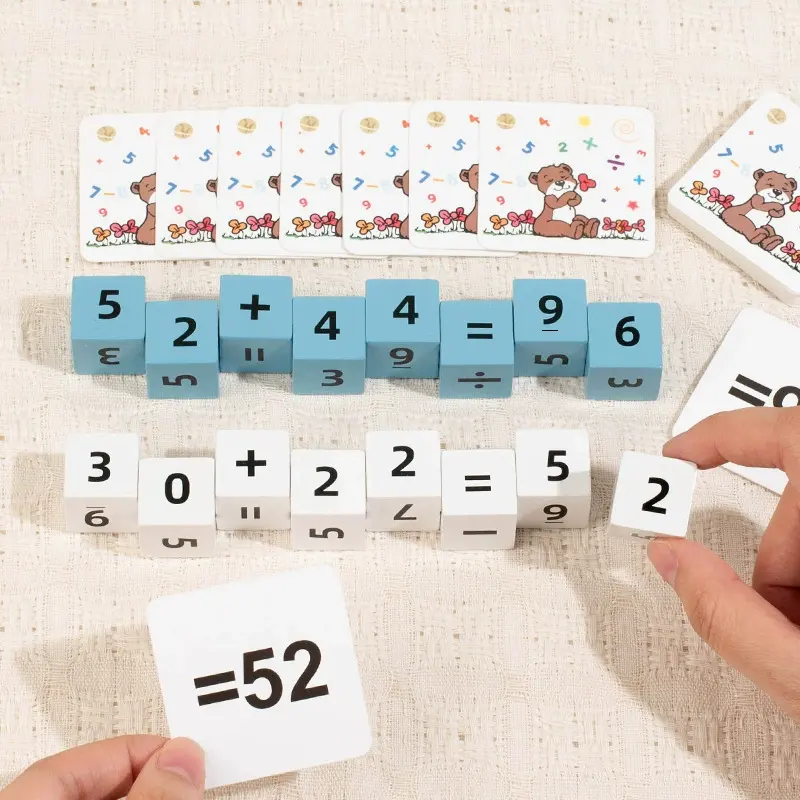
The Wooden Math Operation Learning Blocks turn basic math practice into a hands-on activity.
Instead of asking a child to sit with only a pencil and exercise book, parents and teachers can use the wooden pieces to introduce numbers and mathematical operations in a more interactive way.
It can become a useful everyday learning aid for children who are beginning to understand how numbers work.
Helpful for Children Who Lose Interest in Math
Not every child enjoys traditional math practice.
Some children become distracted when they see:
- long worksheets;
- repeated sums;
- too much writing;
- numbers without anything visual to connect them with.
A hands-on learning tool gives parents another way to approach the same subject.
Instead of saying:
“Sit down and finish your math.”
a parent can turn it into:
“Can you build the answer?”
or
“Can you find the right number?”
That small change can make practice feel more like an activity and less like another task.
The product does not replace normal math learning. It gives parents an additional way to make practice more approachable.
From Abstract Numbers to Something Children Can Handle
Young children are still learning what numbers actually mean.
Seeing 5, hearing “five” and understanding a mathematical operation are different steps.
Physical learning pieces can help make these concepts more concrete.
Children can:
- look at the numbers;
- move the pieces;
- arrange them;
- solve a simple operation;
- check the answer;
- try again.
This makes the activity more active than simply copying an answer from a book.
Useful for Number Recognition
Before children become comfortable with arithmetic, they need to recognise numbers confidently.
Parents or teachers can use the pieces for simple activities such as:
- “Find number 4.”
- “Which number comes after 6?”
- “Can you put these numbers in order?”
- “Show me the bigger number.”
- “Which number is missing?”
The same product can therefore be useful before formal addition and subtraction practice begins.
Practise Basic Math Operations
Once the child is ready, the set can be used for practising simple mathematical operations.
Depending on the pieces included in the set, learning activities can include basic operations such as:
- addition;
- subtraction;
- number matching;
- simple arithmetic practice;
- arranging mathematical expressions.
The focus should remain on understanding the process, not simply memorising an answer.
A Different Way for Parents to Teach at Home
Parents often know that a child needs more practice but are not always sure how to make that practice interesting.
This learning set gives them a simple physical tool to use.
For example:
Quick after-school practice
Instead of opening another worksheet immediately, spend a few minutes building simple sums together.
Weekend learning
Use the blocks for a short learning game without making the activity feel like school homework.
One-to-one practice
Sit beside the child and work through numbers slowly.
Revision before a test
Use familiar operations to review basic concepts in a different format.
When the child gets stuck
Break the question into smaller pieces and use the blocks to demonstrate what the numbers are doing.
The goal is not longer study sessions.
It is to make short learning sessions easier to participate in.
A Practical Classroom Teaching Aid
The product is not only for home.
Teachers can use it as a simple hands-on learning aid in:
- preschool;
- kindergarten;
- early primary learning;
- small-group activities;
- individual support sessions;
- learning corners;
- after-school programmes.
The supplier information specifically identifies preschool, kindergarten and early-learning use for the product.
Help Bring Attention Back to the Lesson
Young learners can lose attention when a lesson depends only on listening.
A physical teaching aid gives the teacher something the child can:
- look at;
- touch;
- move;
- arrange;
- respond to.
For example, rather than asking the whole class:
“What is 3 + 2?”
a teacher can invite a child to come forward, choose the pieces and build the operation.
That can make the lesson more participatory and give other students something visual to follow.
Useful for Small-Group Learning
A teacher does not always need to use the set only for one child.
It can also become part of a small-group activity.
One child can:
another can:
and another can:
This creates opportunities for children to learn while participating together.
Useful for Children Who Need Extra Practice
Some students understand a lesson quickly.
Others need to see the same idea presented in another way.
A teacher can keep a hands-on math set available for children who benefit from additional practice after the main explanation.
This makes it useful as a supplementary classroom resource rather than replacing normal teaching.
A Learning Tool Children Can Explore
It does not always need to begin with a formal lesson.
Parents and teachers can also allow children to explore the pieces themselves.
They may:
- sort numbers;
- arrange them in order;
- create their own sums;
- challenge a parent;
- ask a friend to solve a question;
- invent simple math games.
This open-ended use can help keep the product useful beyond one specific exercise.
A Thoughtful Educational Gift
Many children’s gifts are enjoyable for a short period and then forgotten.
A learning product offers something different.
The Wooden Math Operation Learning Blocks can work as a practical gift for:
- birthdays;
- school achievements;
- beginning school;
- returning to school;
- classroom rewards;
- educational gift packs;
- teacher-to-student gifts.
It combines the feeling of receiving a gift with something the child can continue using during learning.
A Useful Teacher-to-Student Gift
This is one of the strongest additional use cases for the product.
Teachers often look for small gifts that are:
- meaningful;
- useful;
- suitable for children;
- connected to learning.
Instead of giving only a decorative item, a teacher can give a math-learning set that the student can continue using at home.
It can work especially well for:
- student recognition;
- end-of-term gifts;
- class prizes;
- improvement awards;
- learning-event giveaways;
- maths-day gifts;
- school programme gifts.
The message behind the gift becomes:
“Keep learning and keep exploring.”
That gives the product more lasting purpose than a simple reward item.
Useful for Schools and Learning Centres
Schools, coaching centres and children’s learning programmes can also consider the product for:
- classroom resources;
- math activity corners;
- teacher kits;
- student reward programmes;
- learning events;
- educational gift packs.
Because it does not require batteries, screens or charging, it is straightforward to bring into different learning environments.
Screen-Free Math Practice
Not every learning activity needs a phone or tablet.
This wooden set gives children a simple way to practise math using physical pieces.
That can be useful for parents who want to include more:
- table activities;
- hands-on learning;
- parent-child interaction;
- screen-free study time
in the child’s routine.
Parent & Child Learning Time
Math practice can also become a small shared activity.
A parent can ask the questions while the child builds the answers.
Later, the child can reverse the roles:
the child creates the sum and the parent solves it.
This turns learning into interaction rather than correction.
Turn Practice into Small Games
Parents and teachers can create many quick activities using the same set.
Examples include:
Find the Number
Say a number and ask the child to find it.
What Comes Next?
Build part of a number sequence and leave one place empty.
Build the Sum
Say a simple operation and ask the child to arrange it.
Beat Your Own Time
Ask the child to complete several familiar questions and see whether they can become quicker with practice.
Keep this friendly rather than competitive.
Teacher Challenge
The teacher deliberately builds an incorrect answer and asks:
“Can anyone find my mistake?”
Child Becomes the Teacher
Let the child create a question for the adult.
This can be especially engaging for children who normally hesitate during formal practice.
Why Hands-On Learning Can Be Useful
The value of the product is not that wooden blocks somehow teach mathematics by themselves.
Its value is that they give adults another way to show, practise and discuss math.
The learning still comes from:
- explanation;
- repetition;
- questions;
- practice;
- interaction.
The blocks simply make those activities more visual and hands-on.
That is why the product can be useful both for a parent at home and a teacher in a classroom.
Made from Solid Wood
The product is being made from solid wood.
The physical wooden format gives the learning activity a different feel from paper flash cards or digital exercises and makes the pieces suitable for repeated supervised learning sessions.
When This Product Becomes Especially Useful
Consider adding it to a child’s learning routine when:
- basic math practice is becoming repetitive;
- the child struggles to stay focused on worksheets;
- a parent wants a more interactive way to practise numbers;
- the child is beginning basic arithmetic;
- a teacher wants visual teaching materials;
- a classroom needs hands-on activity resources;
- you want an educational gift rather than another decorative toy.
How Parents Can Use It
- Begin with number recognition before introducing operations.
- Demonstrate one example rather than immediately testing the child.
- Let the child move and arrange the pieces.
- Keep early sessions short.
- Increase the difficulty gradually.
- Allow the child to create questions too.
- Use encouragement rather than turning every mistake into a correction.
- Combine hands-on practice with normal books and schoolwork.
How Teachers Can Use It
- Demonstrate a mathematical operation at the front of the class.
- Invite students to arrange the answer.
- Use it in a learning corner.
- Give students simple problems in pairs or small groups.
- Use it for additional practice with children who need another explanation.
- Turn revision into short classroom games.
- Keep it available as part of the classroom’s reusable teaching materials.
Care & Storage
- Keep the wooden pieces dry.
- Wipe with a soft dry or slightly damp cloth when needed.
- Do not soak wooden components in water.
- Allow pieces to dry completely before storage.
- Keep all components together after use.
- Store in a dry place away from excessive heat and moisture.
- Check the pieces periodically and stop using any part that becomes damaged or develops rough or broken edges.
Safety Notes
- Use under suitable adult supervision.
- Check all pieces before giving them to a child.
- Keep damaged or broken pieces out of use.
- Make sure the product and individual component sizes are appropriate for the child’s age and stage.
- Do not allow children to put learning pieces in the mouth.
- Keep the complete set stored safely after use.
FAQ
What can children learn with this product?
It can be used for number recognition, sequencing and basic mathematical-operation practice.
Is it useful for children who do not enjoy math?
It can provide a different, more hands-on way to approach the same learning.
Some children may find moving and arranging physical pieces more engaging than completing another worksheet, although every child learns differently.
Does it teach math automatically?
No.
It works best as a learning aid used alongside explanation and interaction from a parent, teacher or caregiver.
Can teachers use it in class?
Yes. It can be used for demonstrations, small-group activities, revision, individual practice and classroom learning corners.
Can a teacher give it as a gift to a student?
Yes. It can make a practical educational gift for student rewards, school events, improvement recognition, birthdays or end-of-term gifts.
Is it only for school use?
No. Parents can use it at home for short learning sessions, homework support and screen-free math practice.
Is it made of wood?
Yes. The product material is solid wood.
Does it require batteries?
No.











Reviews
There are no reviews yet