

See the Product Trust information Goodmums has chosen to publish for this product.
This product completed the applicable Goodmums Product Trust & Selection review and met the selection requirements based on the information and evidence available at the time of review.
Goodmums selected this product for its distinctive peanut-shaped design, which offers practical support for side-lying comfort, pregnancy positioning and bed-based labour use. Its simple, non-powered design also makes it a versatile support option from pregnancy through labour.
Information reviewed: September 15, 2026
Product Trust is not a Goodmums certification and is not a guarantee of zero risk. Goodmums presents information from recorded sources and did not perform or issue third-party tests or certifications unless explicitly stated.
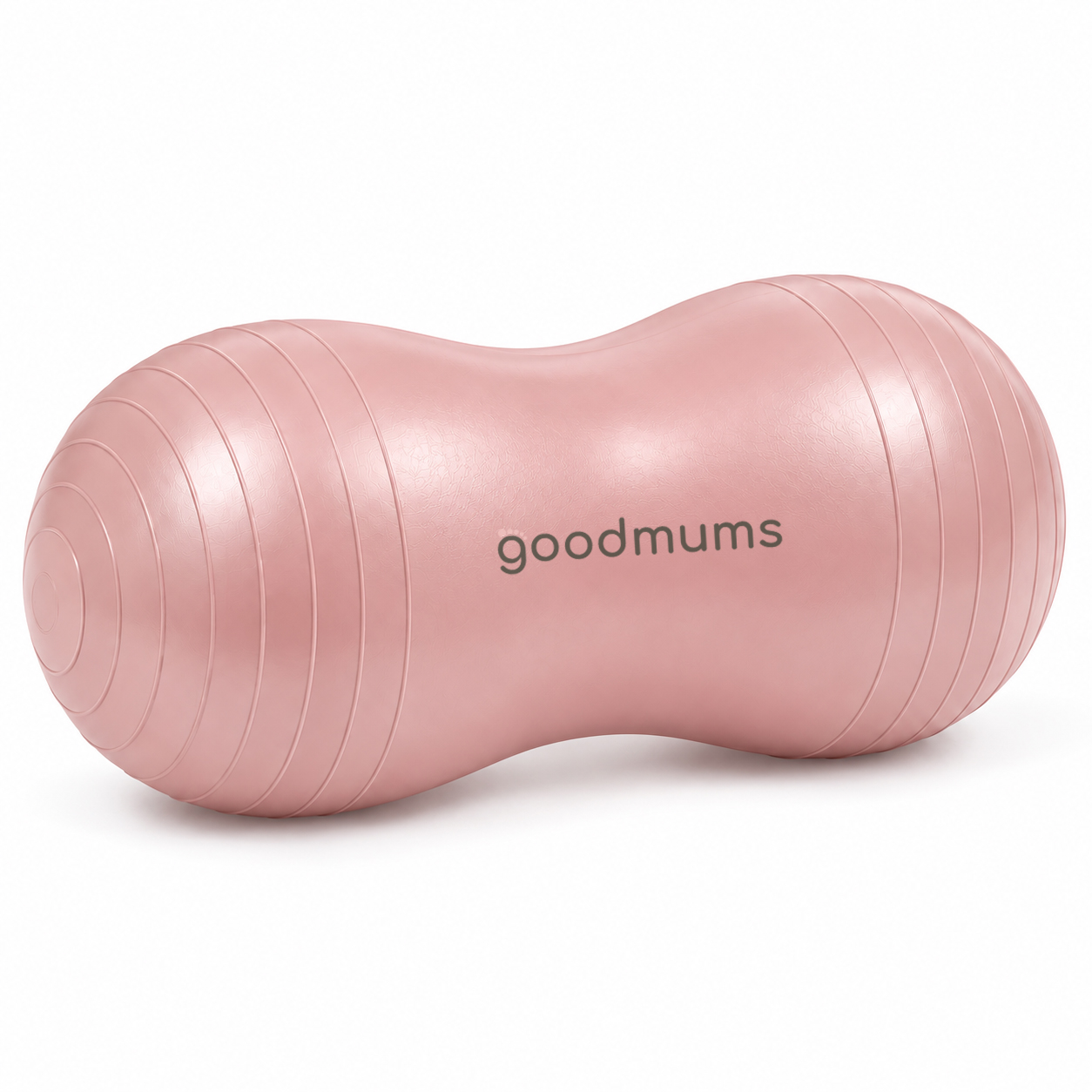
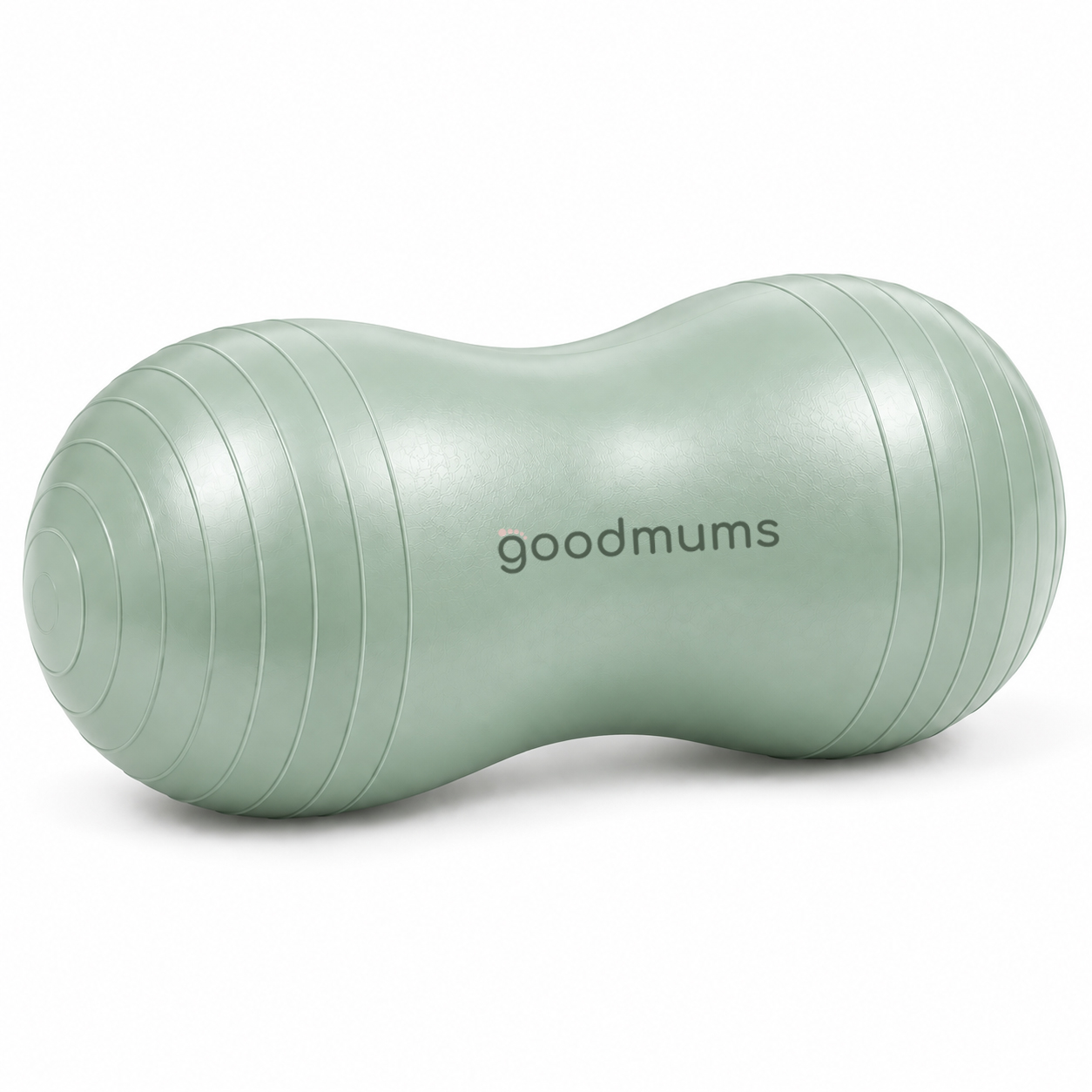
A peanut-shaped inflatable support ball for pregnancy comfort, supported movement and labour positioning. Its narrow centre helps it stay more controlled between the legs during side-lying and other bed-based positions.
Reserve a unit now with a pre-order; we ship as soon as stock arrives.


Delivery or other applicable charges should be confirmed before checkout.
Reserve a unit now with a pre-order; we ship as soon as stock arrives.
Estimated Shipping Date: December 6, 2026
The Pregnancy & Birthing Peanut Ball is an inflatable support ball shaped with two rounded ends and a narrower centre.
That shape makes it different from a traditional round birthing ball.
A round ball is commonly used for sitting, rocking or leaning. A peanut ball is particularly useful when you want support between or underneath the legs, especially while lying on a bed.
The narrower middle helps the ball sit more naturally between the legs, while the larger ends provide support on both sides. This can make it easier to maintain certain resting, stretching and labour positions without having to constantly hold a round ball in place.
Pregnancy often changes the way ordinary resting and movement positions feel.
A peanut ball gives mums another way to support the legs and body during situations such as:
It is not designed to replace a pregnancy pillow, medical care or professional labour support. Its role is simpler: to provide a shaped support surface that makes certain positions easier to hold.
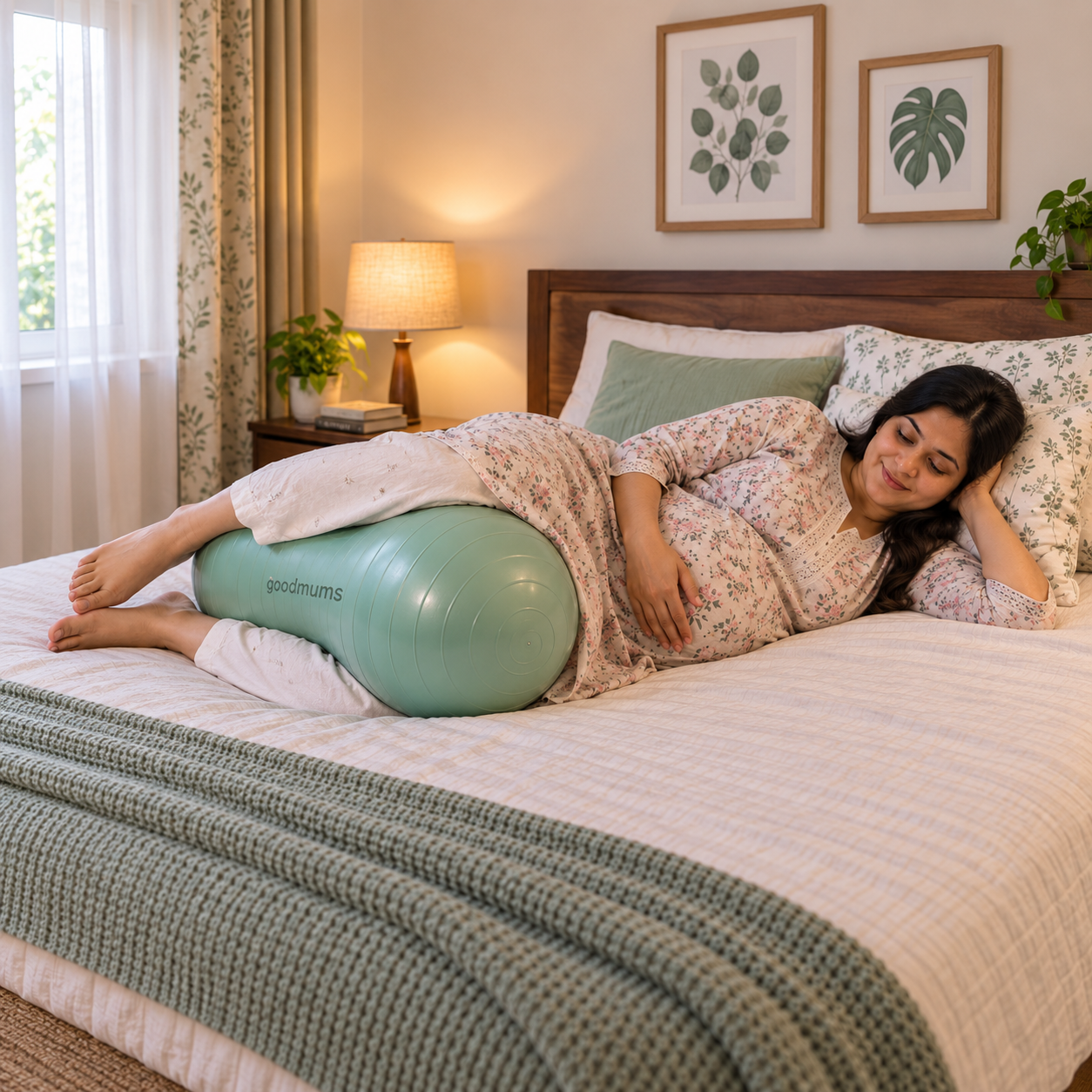
One of the most natural ways to use a peanut ball is while lying on your side.
Placed between the legs, the ball can support the upper leg so you do not have to hold its weight yourself.
This can be useful when resting in bed during pregnancy or when practising positions you may later use during labour.
Because the ball has a narrow middle, the legs can sit around it more naturally than they would around a large round exercise ball.
Pillows can still be used under the head, behind the back or wherever additional comfort is needed.
A peanut ball becomes particularly useful during labour because many of its positions can be used while lying or semi-reclining.
This can provide another positioning option when a mum is tired, prefers to remain in bed or has reduced freedom of movement.
Peanut balls are also commonly used in labour settings when an epidural limits standing and walking. In this situation, repositioning should be done with help from the maternity care team because balance, sensation and leg control may be reduced.
The ball supports positioning. It does not determine how labour will progress.
The shape is the main practical difference.
The wider ends provide a larger surface for the thighs, knees or lower legs to rest against.
The centre sits between the legs more naturally and helps reduce the tendency of a traditional round ball to move away from the intended position.
Many peanut-ball positions can be performed without sitting directly on the ball.
This makes it useful alongside the bed rather than only as a conventional exercise ball.
The ball can be positioned differently depending on the stage of labour, comfort and advice from the maternity care team.
Lie comfortably on your side with the legs slightly bent.
Place the narrow centre of the peanut ball between the knees and allow the upper leg to rest over the ball.
This position supports separation between the legs while the mum remains lying down.
During labour, a midwife, doctor or other maternity professional can help decide whether this position is suitable.
The peanut ball may also be positioned between the lower legs or ankles while lying on the side.
Changing the position of the ball changes the angle of the legs and pelvis.
During labour, this type of positioning should be chosen with guidance from the maternity care team rather than treated as a fixed exercise.
The ball can sit between the knees while the legs are bent further back.
This provides another supported side-lying position without requiring the mum to sit or stand.
From a supported semi-reclined position, one leg can rest over the peanut ball while the other remains comfortably positioned on the bed.
Use pillows behind the back and have someone nearby when extra support is needed.
A peanut ball can also be used to support one leg during certain kneeling or all-fours positions.
These positions require more balance and should be used carefully, particularly during labour.
The ball does not have to wait until labour begins.
During pregnancy, it can be used as part of gentle movement or supported resting routines when those activities are comfortable and appropriate for you.
For example, it may be useful for:
Pregnancy is different for every mum. Stop any position that causes pain, dizziness, numbness, unusual pressure or discomfort.
During labour, the ball may help a mum maintain different positions while remaining on the bed.
Changing position during labour is sometimes used to support comfort and create different pelvic and leg positions.
Some research has explored whether peanut-ball use may be associated with shorter labour or a greater chance of vaginal birth in some groups. The evidence is still limited, so the ball should not be considered a way to guarantee faster labour, avoid a C-section or produce a particular birth outcome.
Its practical value is as a support and positioning tool.
A traditional birthing ball generally requires the user to sit, lean or actively balance against it.
A peanut ball offers more options while lying down.
That can make it especially practical when:
When an epidural or another condition affects movement or sensation, do not reposition on the ball without help.
If you have symphysis pubis dysfunction (SPD), pelvic girdle pain or another condition affecting the pelvis, ask your maternity care professional before using positions that separate or externally rotate the legs.
A between-the-knees position may not be appropriate for everyone.
This limitation matters more than trying to force a particular labour position.
Keep the surface clean and dry between uses.
Wipe away normal surface dirt with a soft damp cloth and allow the ball to dry before storage.
Store away from:
Always inspect an inflatable support product before use and stop using it if you notice damage that may affect its ability to hold air or support weight.
A peanut ball is an inflatable support ball with two rounded ends and a narrower centre. During pregnancy and labour, the shape makes it useful for supporting the legs and maintaining positions while lying or semi-reclining.
A traditional birthing ball is round and is often used for sitting, rocking or leaning.
A peanut ball has a narrow middle and is commonly placed between or underneath the legs, making it especially useful for bed-based positions.
Yes. Side-lying is one of the most common ways a peanut ball is used. The ball can sit between the knees, thighs or lower legs depending on the position and purpose.
No. It can also be used during pregnancy for supported resting, gentle movement and practising comfortable positions before labour.
Peanut balls are often used for bed-based labour positions when an epidural limits movement.
However, an epidural may reduce sensation, balance and control of the legs, so positioning and repositioning should be done with assistance from the maternity care team.
Research has explored this possibility, and some studies have reported shorter labour or fewer C-sections in certain groups.
The evidence is not strong enough to promise a particular result. The Pregnancy & Birthing Peanut Ball should be treated as a support and positioning tool, not as a product that guarantees faster labour or a particular type of delivery.
Some peanut-ball positions spread or rotate the legs. If you have SPD, pelvic girdle pain or another pelvic condition, ask your maternity care professional which positions are appropriate for you before using the ball.
For simple side-lying positions, the ball may be straightforward to position. More complex positions and any use after an epidural are better done with assistance from your partner, doula, midwife or maternity care team.
| Weight | 1.5 kg |
|---|---|
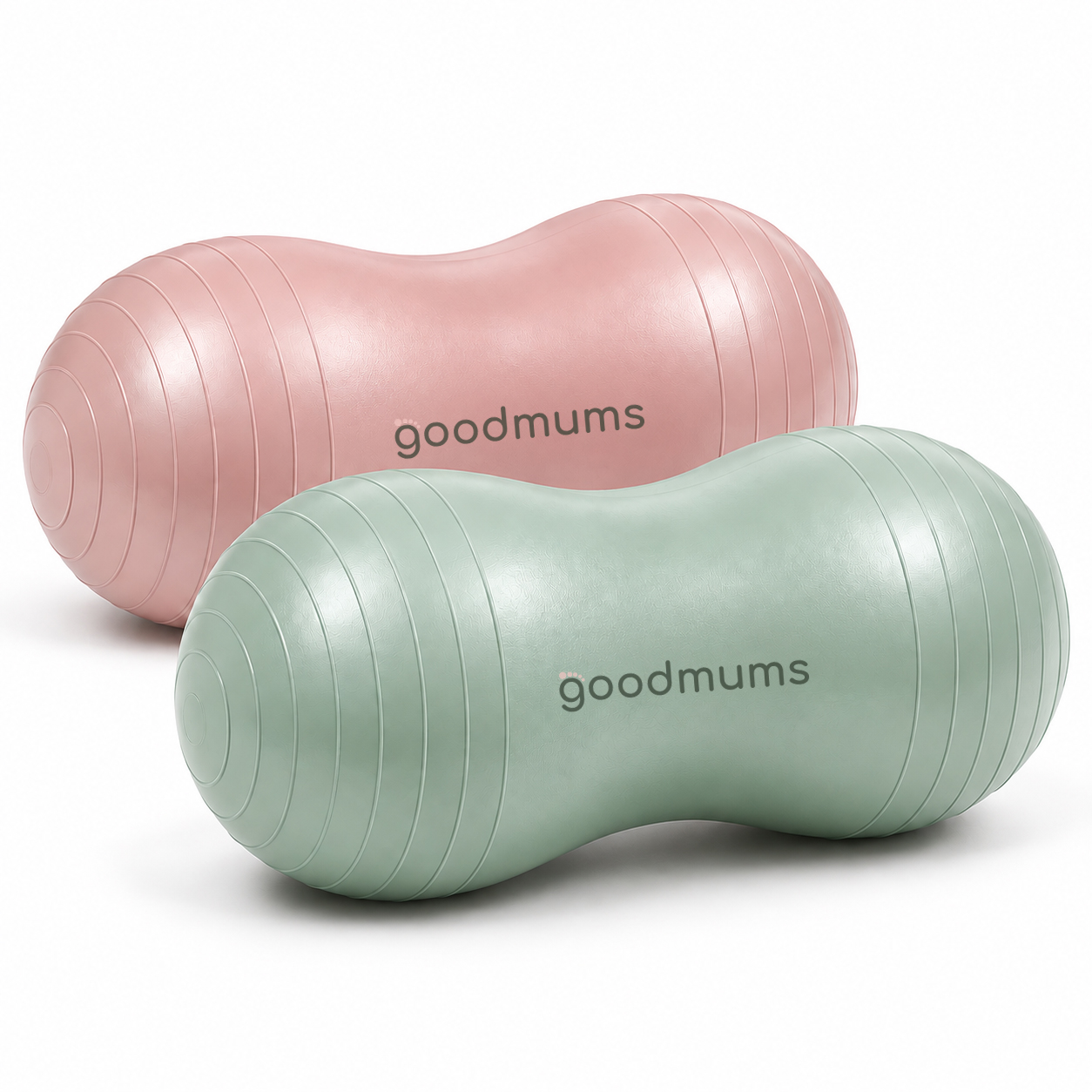
| Color | Blush, Sage |
| Material | PVC |
| Place of Origin | Bangladesh |
| Trimester |
You may also consider
care · learn · grow
Mother care, baby care and learning products with clearer product information for families across Bangladesh.


© 2026 Goodmums.

Hi 👋 How can we help you today?
Continue the conversation securely in Facebook Messenger.
Continue in Messenger
Mother care, baby care and learning products with clearer product information for families across Bangladesh.



Reviews
There are no reviews yet