

See the Product Trust information Goodmums has chosen to publish for this product.
This product completed the applicable Goodmums Product Trust & Selection review and met the selection requirements based on the information and evidence available at the time of review.
Goodmums selected this product because it gives parents a simple way to understand and manage the different stages of early oral care instead of relying on one brush for everything. The three-piece system supports gentle cleaning before teeth appear, care around emerging teeth, and the transition to regular brushing from the first tooth onward.
Information reviewed: September 28, 2026
Product Trust is not a Goodmums certification and is not a guarantee of zero risk. Goodmums presents information from recorded sources and did not perform or issue third-party tests or certifications unless explicitly stated.
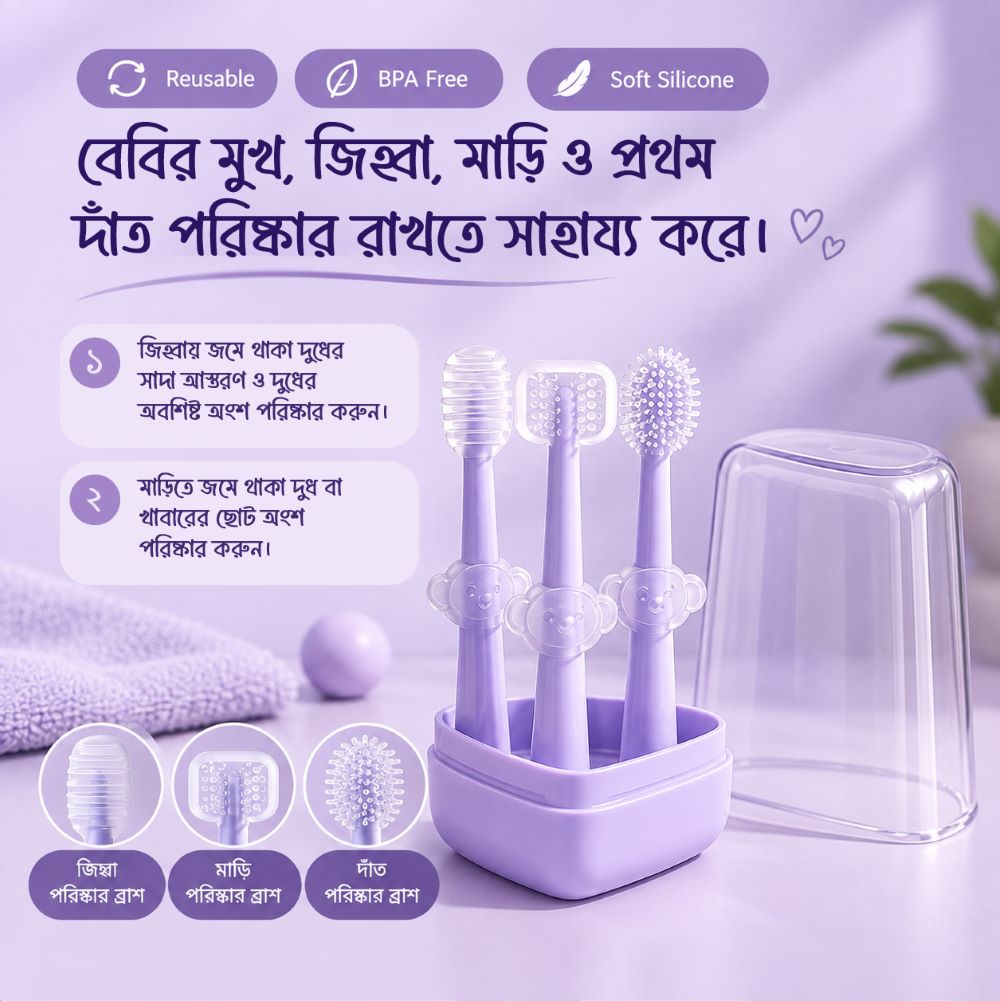
A reusable 3-piece oral-care set for gently cleaning a baby’s tongue, gums and first teeth. Each brush is designed for a different stage — from early mouth cleaning before teeth appear, through teething and emerging teeth, to the first regular brushing routine.


Delivery or other applicable charges should be confirmed before checkout.
A baby does not need to have several teeth before parents begin thinking about oral hygiene.
Milk residue can remain on the tongue or around the gums, teething brings a new stage of mouth care,
and once the first tooth appears, brushing becomes part of the daily routine.
The Reusable Baby Oral Care Set brings those early stages together in one simple
3-piece system. Instead of using the same tool for every stage, parents can choose the brush that
better suits what they are trying to clean.
Each of the three brushes has a different role in baby’s early oral-care routine.
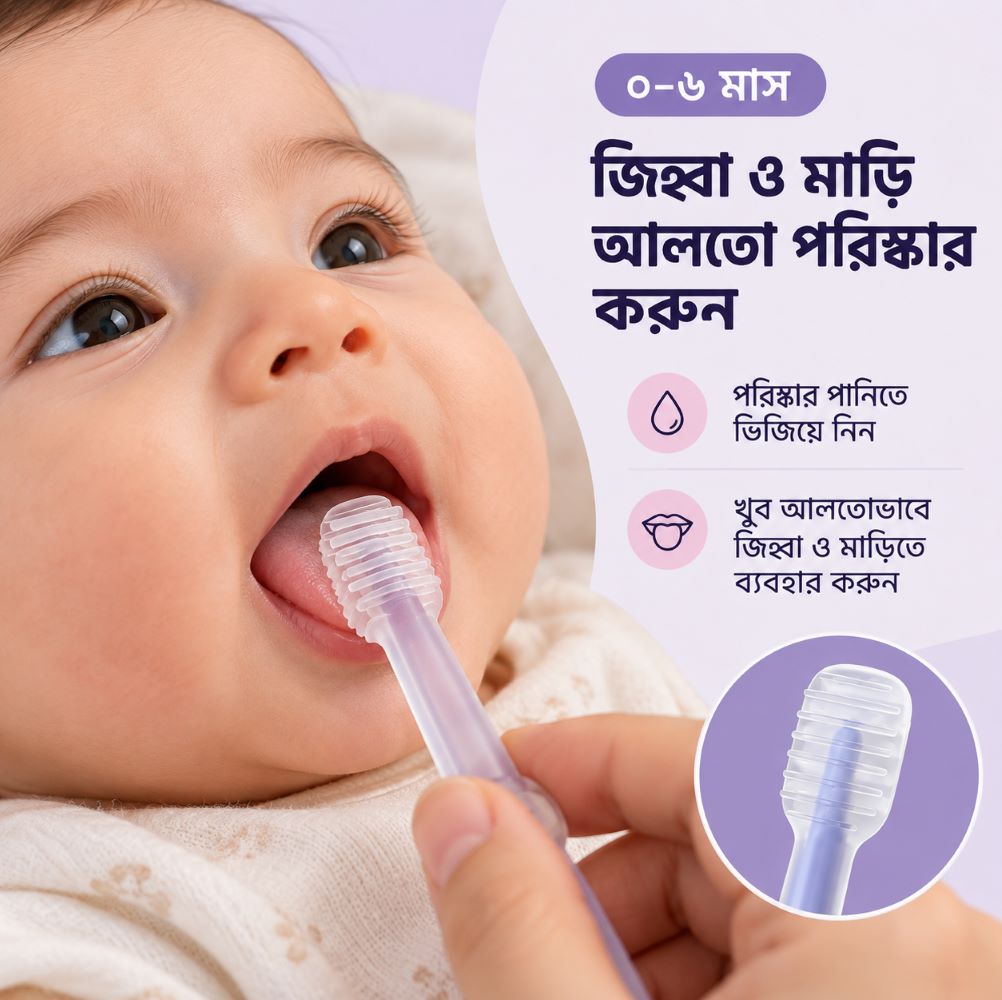
For gentle cleaning of the tongue and gums before the first tooth appears.
Helps remove visible milk residue and supports early mouth cleaning.
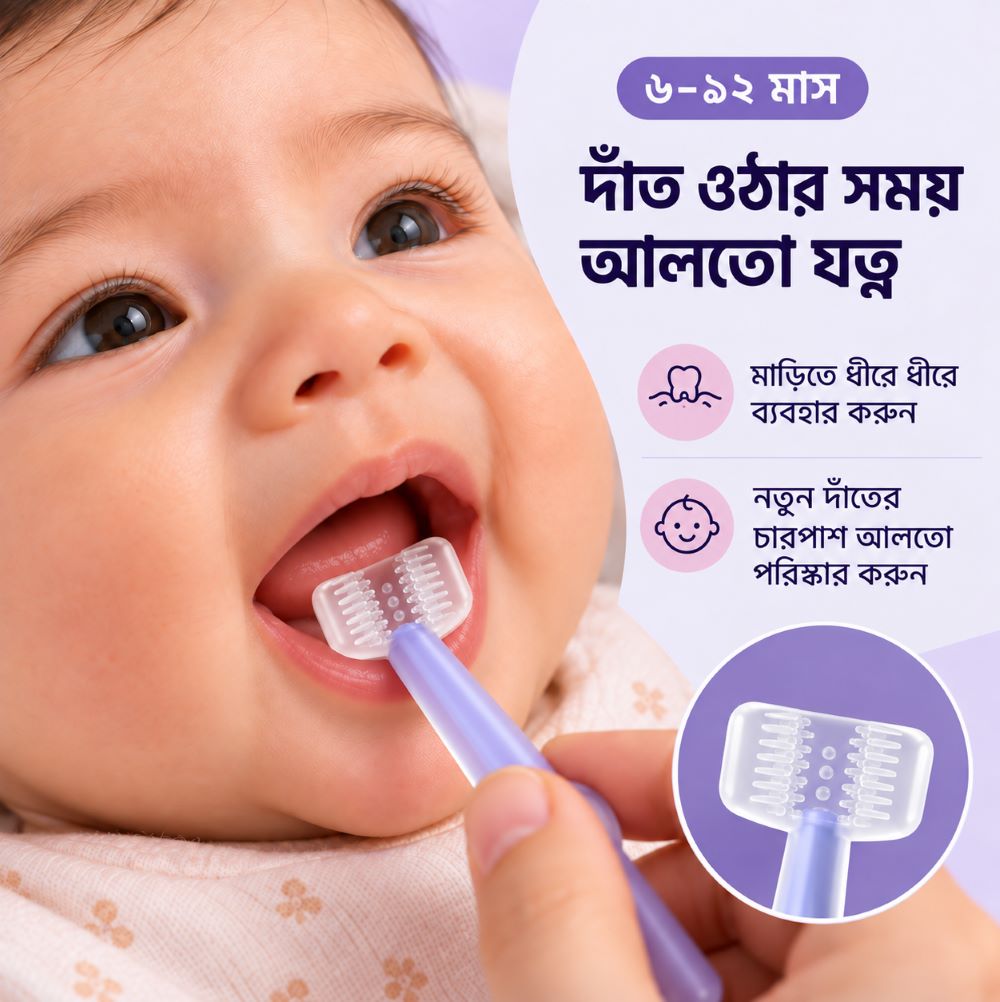
For teething-stage gum cleaning, light gum massage and cleaning around emerging teeth.
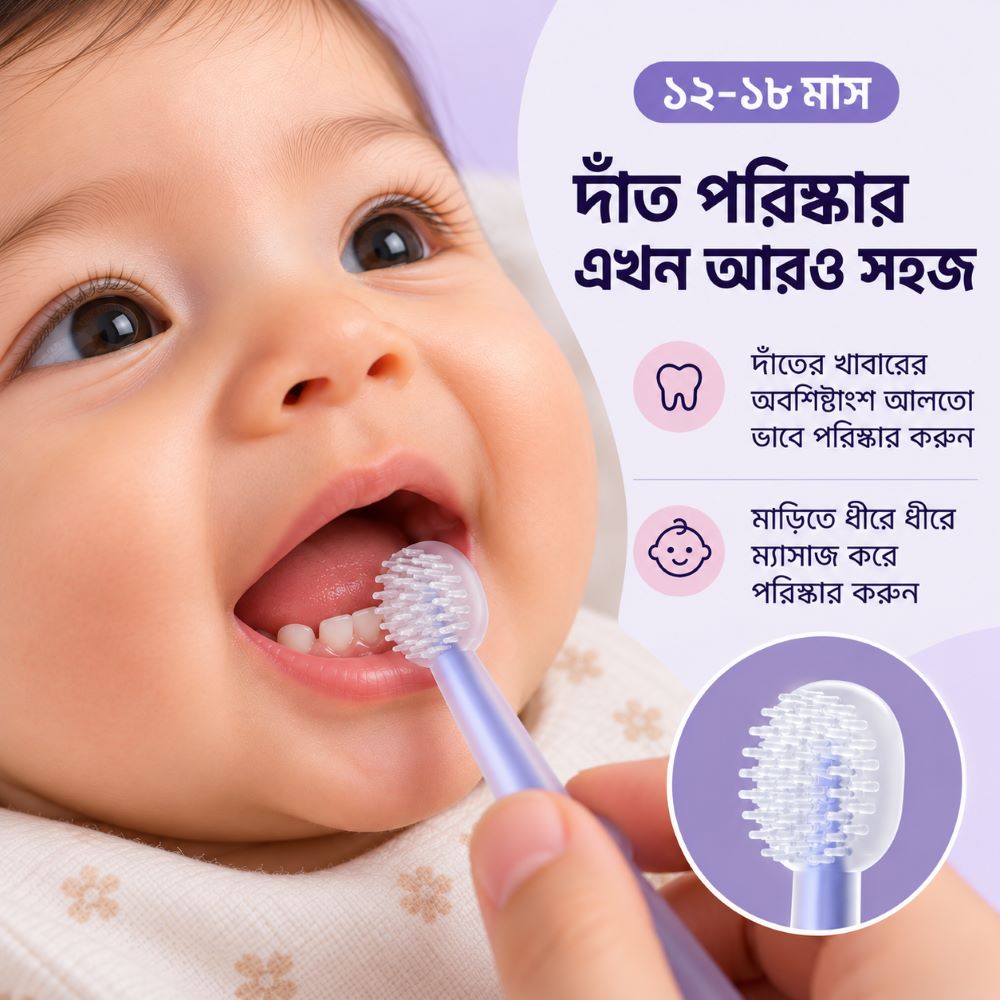
For cleaning the first teeth and helping parents begin a regular brushing routine.
Before teeth appear, oral care is mainly about gently cleaning the tongue and gums.
The soft silicone cleaner can be used to help remove visible milk coating from the tongue,
milk residue around the gums and small visible residue inside the mouth.
Use with clean water. No toothpaste is normally needed before the first tooth appears.
After milk feeding, parents sometimes notice a white coating on the tongue.
A dedicated soft oral-care tool gives parents a simple way to clean visible residue without
relying on random or unsuitable items inside the baby’s mouth.
When teething starts, the mouth is changing even before several teeth are visible.
The soft U-shaped brush is designed for gentle gum cleaning, cleaning around emerging teeth,
light gum massage and helping baby become familiar with an oral-care routine.
Use slow, gentle movements and never press hard against the gums.
This brush sits between early gum cleaning and regular toothbrushing.
It can help parents move naturally from cleaning the mouth to
cleaning around the first emerging teeth.
The first tooth is an exciting milestone — and it is also the point when regular brushing begins.
The soft baby toothbrush can be used to:
Milk can leave a visible coating on a baby’s tongue. For ordinary visible milk residue,
the tongue cleaner gives parents a soft tool for gentle routine cleaning.
It is important not to assume every white patch is milk residue.
If white patches do not wipe away easily, do not keep scrubbing harder.
Persistent white patches can have another cause and may need medical assessment.
Milk or small food particles may remain around the gums, particularly as feeding routines change.
A dedicated soft gum-cleaning tool can make it easier for parents to gently clean these areas
while keeping pressure light.
As feeding progresses beyond milk, small food particles can sometimes remain around the gums
or newly erupted teeth. Parents can choose the brush that matches the baby’s current stage.
A baby’s mouth changes significantly during the first stages of oral care.
A tool that makes sense before teeth appear may not be the best choice once teeth begin emerging.
The 3-piece set gives parents a simple progression to follow as baby grows.
Many parents clean a baby’s mouth using a cloth or finger.
The purpose of this set is not to suggest that every cloth-cleaning method is unsuitable.
Instead, it gives parents dedicated reusable tools for gentle baby oral care,
helping make tongue cleaning, gum care and first-tooth brushing part of a more consistent routine.
One of the useful parts of beginning oral care early is familiarity.
Gentle mouth cleaning before teeth appear can gradually introduce baby to regular oral care.
During teething, the routine can move towards gentle gum and emerging-tooth care.
When the first tooth appears, parents can transition into regular brushing.
This means the set is designed to support the changing routine rather than only one stage.
Use with: Clean water.
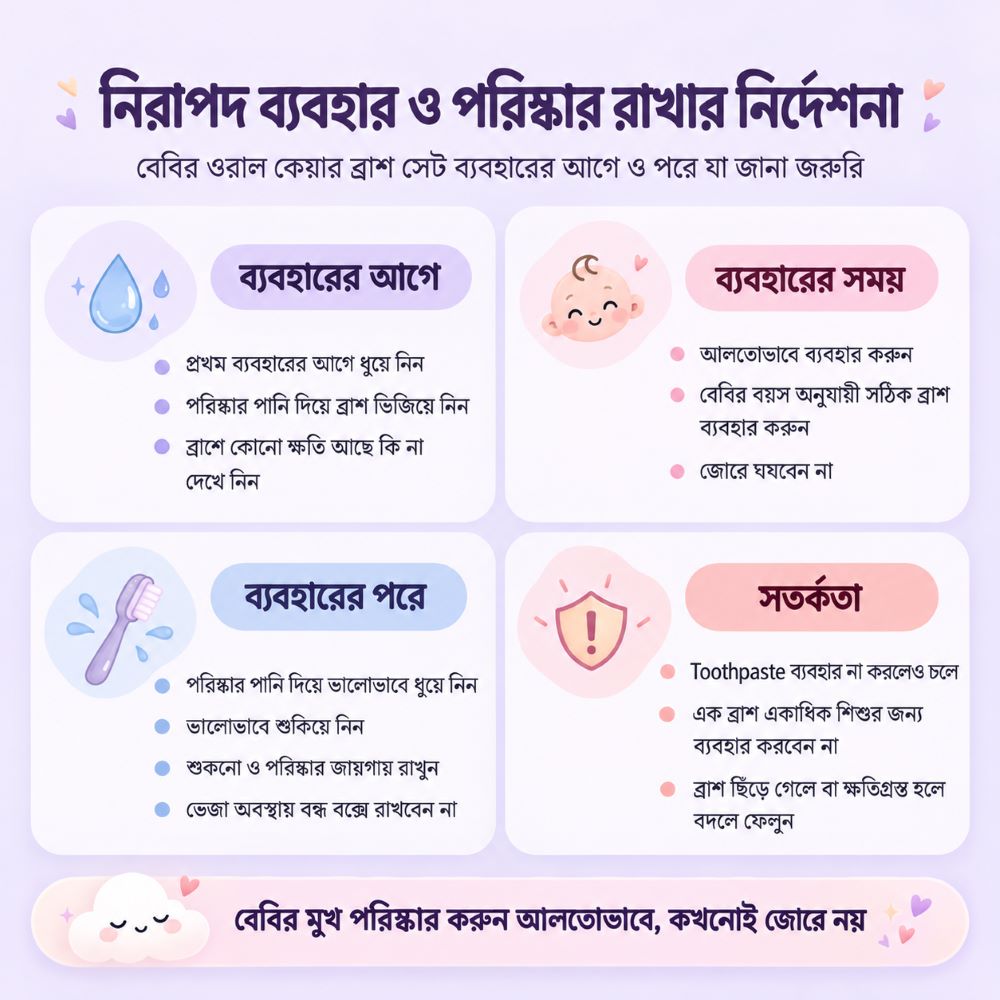
Toothpaste is normally not needed. Use clean water for gentle tongue and gum cleaning.
Begin brushing with a soft baby toothbrush. For children under 3, use only a
rice-grain-sized smear of fluoride toothpaste.
Before teeth appear, gentle tongue and gum cleaning can be included as part of baby’s regular
oral-care routine.
Once the first tooth appears, brush the teeth twice daily,
especially before bedtime.
Baby gums and newly erupted teeth are delicate. The goal is cleaning — not scrubbing.
Use light pressure, slow movements, short sessions and a comfortable position.
If baby becomes very uncomfortable, stop rather than forcing the brush deeper or pressing harder.
Do not automatically boil, microwave, steam, dishwasher-clean or heat-sterilise this set
unless it has been confirmed that the exact product is suitable for that method.
Different silicone and plastic products can have different heat tolerances.
Baby gums and new teeth are delicate. Clean gently and do not scrub hard.
A parent or caregiver should hold and control the brush.
Do not leave an oral-care brush unattended inside baby’s mouth.
Use the brushes only on the visible tongue, gums and teeth.
Do not push a brush towards the back of the mouth.
These are oral-care tools. Do not allow baby to walk, crawl or play with a brush in the mouth,
and do not leave the U-shaped brush in the mouth as an unattended teether.
For hygiene reasons, each child should have their own oral-care brushes.
Do not use a brush if you notice:
Replace a damaged brush immediately.
This product is intended for routine oral hygiene.
It is not intended to diagnose or treat oral thrush, infection, gum disease,
significant mouth pain, feeding problems, sores or other medical or dental conditions.
Seek medical or dental advice when needed, particularly if baby has:
A white coating after milk feeding can sometimes simply be visible milk residue.
If it wipes away gently, routine cleaning may be enough.
If white patches do not wipe away easily, do not continue rubbing or scrubbing harder.
They can have another cause and may need professional assessment.
Replace a brush if:
For the toothbrush used on teeth, conventional toothbrush guidance commonly recommends
replacement around every 3–4 months, or earlier if the bristles become worn or damaged.
Use the soft tongue cleaner for gentle removal of visible milk residue.
The tongue and gum cleaner provides a simple way to begin oral hygiene before brushing starts.
Use the soft U-shaped brush for gentle gum cleaning and cleaning around emerging teeth.
Move to the soft baby toothbrush and begin the regular brushing routine.
Choose the stage-appropriate brush to help clean small visible food residue around gums or teeth.
Follow the simple progression: Tongue → Gum → First Tooth.
This set:
| Weight | .250 kg |
|---|---|
| Material | Silicone |
| Place of Origin | China |
You may also consider
care · learn · grow
Mother care, baby care and learning products with clearer product information for families across Bangladesh.


© 2026 Goodmums.

Hi 👋 How can we help you today?
Continue the conversation securely in Facebook Messenger.
Continue in Messenger
Mother care, baby care and learning products with clearer product information for families across Bangladesh.




Reviews
There are no reviews yet